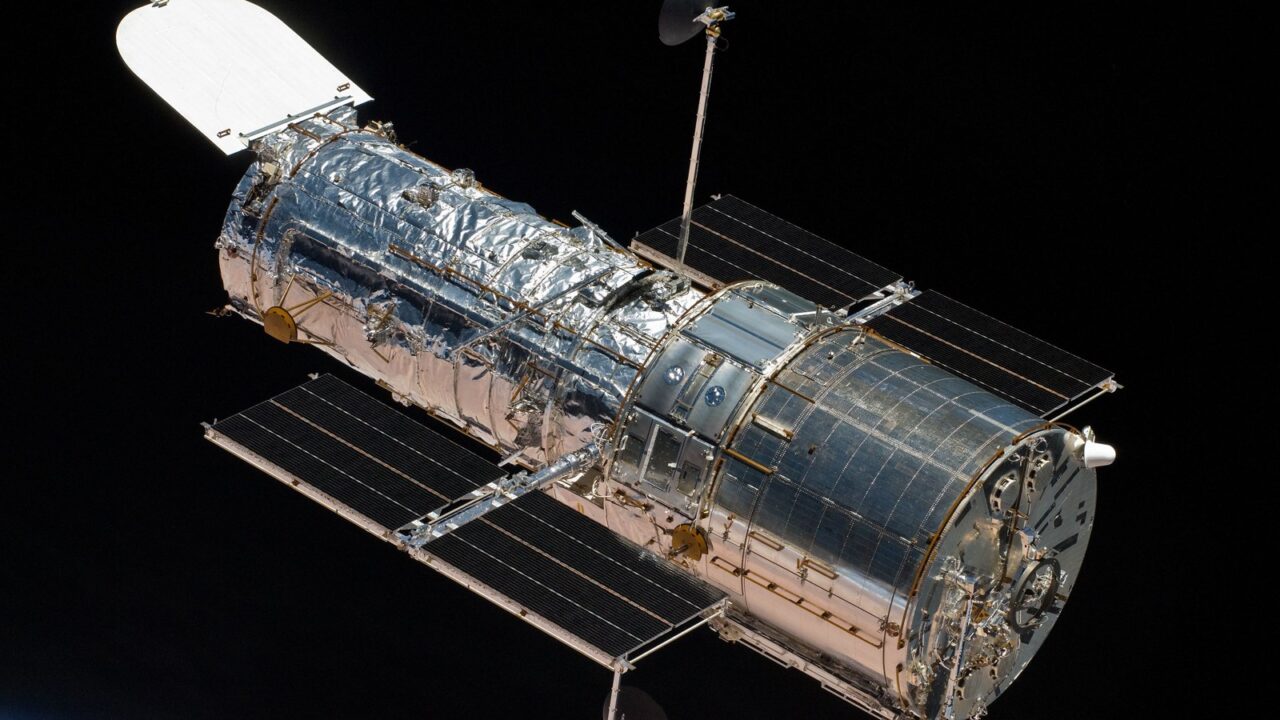
NASA has asked private space companies to propose a rescue for the ageing Hubble Space Telescope, seeking ideas to lift it to a higher orbit, service it, or guide it out of service. The request, issued on 29 October, asks for replies by 30 November, according to reports.
Hubble has no engine of its own, so thin air at its altitude slowly drags it downward. According to reports, analysis puts its likely return to the atmosphere in 2033 or 2034, so any rescue mission would need to fly by 2032. A boost would need to raise it to at least 600 kilometres, about 373 miles, without damaging it.
NASA Administrator Jared Isaacman said Hubble still has important science ahead of it, and that every reasonable and cost effective chance to keep it working should be explored, because a longer life in orbit would mean more discoveries.
Three options, no contract yet
The request sets out three paths. A company could capture Hubble and raise its orbit, carry out servicing to improve its performance, or plan a controlled return or disposal when the mission ends. It is an information request, not a contract award, so no company has been chosen and no mission has been approved.
Any bidder would need to explain how it would reach Hubble, capture it safely, and carry out the work. Reports note that a docking aid fitted during the final shuttle visit in 2009 should help a future vehicle attach, but the capture would still be delicate work on a fragile observatory. That kind of careful validation is familiar in current space work, where a test telescope for a future gravitational wave mission is already being proved on the ground.
Why the clock matters
Hubble was last serviced by astronauts in 2009, and the shuttle fleet that made those visits possible has long since retired. Since then, no government vehicle has been available to reach it, which is why the agency is now looking to industry. Officials say commercial firms have rapidly improved their ability to capture and service satellites in orbit.
The stakes are wider than one telescope. Hubble has worked for more than 35 years, and reports describing the notice say demand for its observing time far exceeds supply, with no replacement of the same kind expected for years. Losing it early would leave a gap in ultraviolet and optical astronomy that a successor could not quickly fill. The same shift is visible elsewhere, including recent nuclear power plans for Moon and Mars missions.
The 30 November deadline is only a first test. The replies will show whether firms believe a rescue is possible and affordable, or whether a safe ending is the more honest outcome for an observatory that has outlived expectations.