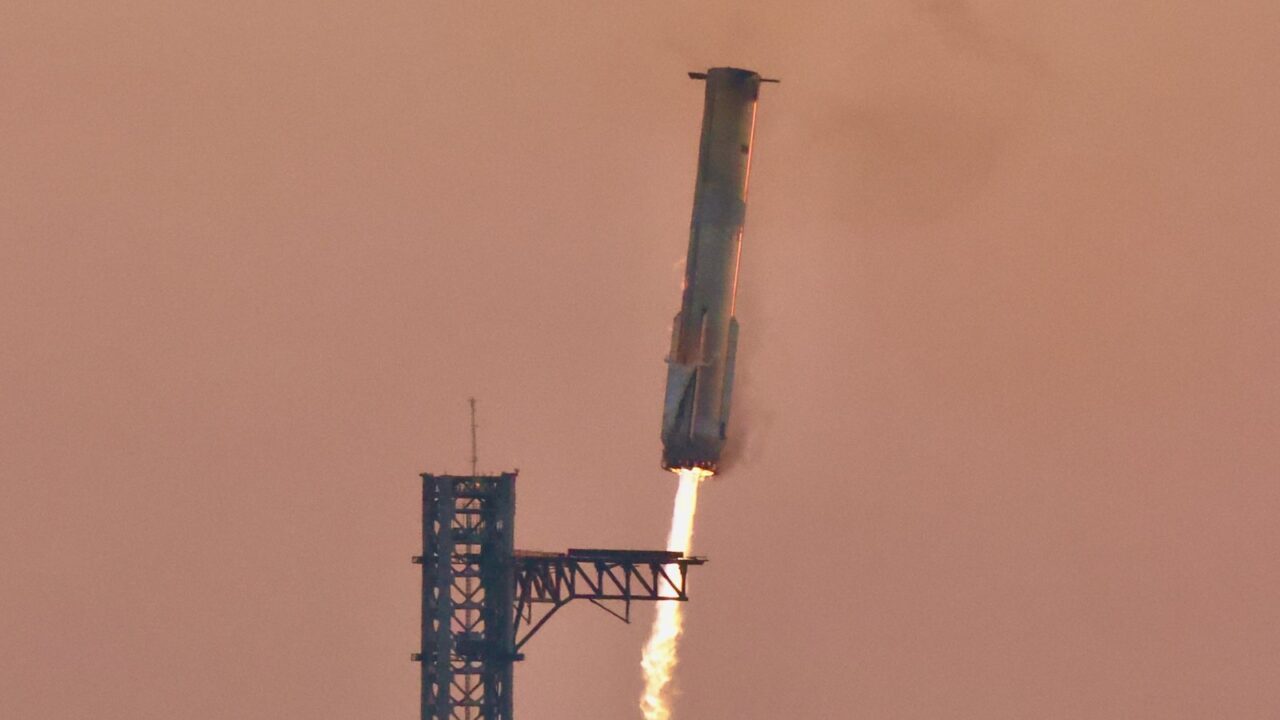
SpaceX has caught its Starship upper stage with the giant mechanical arms of its launch tower for the first time, completing a return from orbit that the company had never attempted before.
The vehicle spent about 22 hours in space after lifting off from Starbase in Texas on Friday afternoon. It circled the planet 14 times and released 26 Starlink satellites before firing an engine to come home. On Saturday afternoon it dropped through the clouds, flipped upright and settled between the two arms of the tower, known as Mechazilla, at around 4:20pm Eastern time.
The catch took less than a minute from the moment the vehicle came into view, according to reports. Two small nubs on either side of the rocket, each sticking out by only about a foot, were the only points of contact with the arms.
One half of the plan went wrong
The flight was not a complete success. The Super Heavy booster, the first stage of the vehicle, called off its own return and was diverted over the Gulf of Mexico, where it was lost. SpaceX had planned to catch both halves of the rocket with the same tower, which would have been another first.
The booster was the first of a new version to attempt a tower catch. SpaceX has caught earlier boosters before, but every Starship upper stage had ended its flight in the ocean.
Why the catch matters
Catching the ship matters because it is the first time SpaceX has brought both parts of a Starship rocket back to its launch site. The company aims to fly the vehicle again quickly with little refurbishment. The company chief executive had told investors success was not guaranteed.
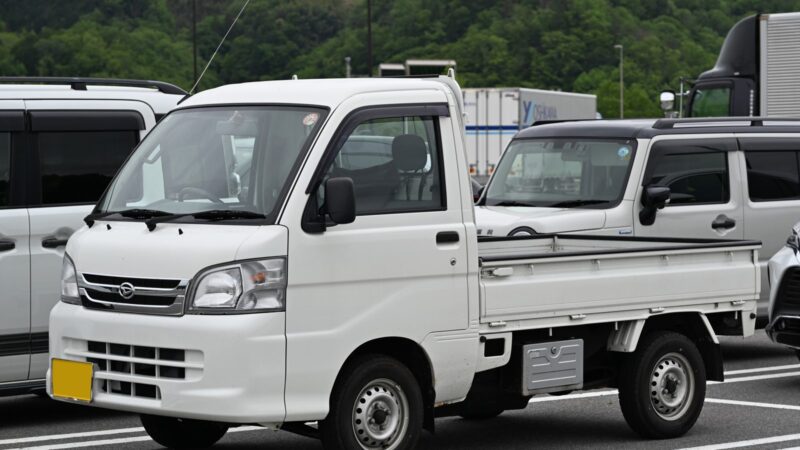
The catch capped a week for American technology which had already seen the Microsoft Outlook outage lock users out of email, while another American manufacturer made news with the tiny Indiana built kei truck, capped at 25 mph.
SpaceX has five Starships in development, and its factory can already build an upper stage every three weeks. The company has talked of flying 135 times a year within a few years, then thousands of times. For comparison, NASA space shuttles made 135 flights in total across 30 years.
The hardest part may lie ahead. The heat shield that protects the ship on re-entry is likely to be the most difficult piece of rapid reuse to perfect, and the company will need many more successful catches before they become routine.
The picture of the largest rocket ever built easing into the arms of its own launch tower is a clear sign that the plan to make it fully reusable is moving from drawing board to reality. NASA has contracted the vehicle to land astronauts on the Moon later this decade.