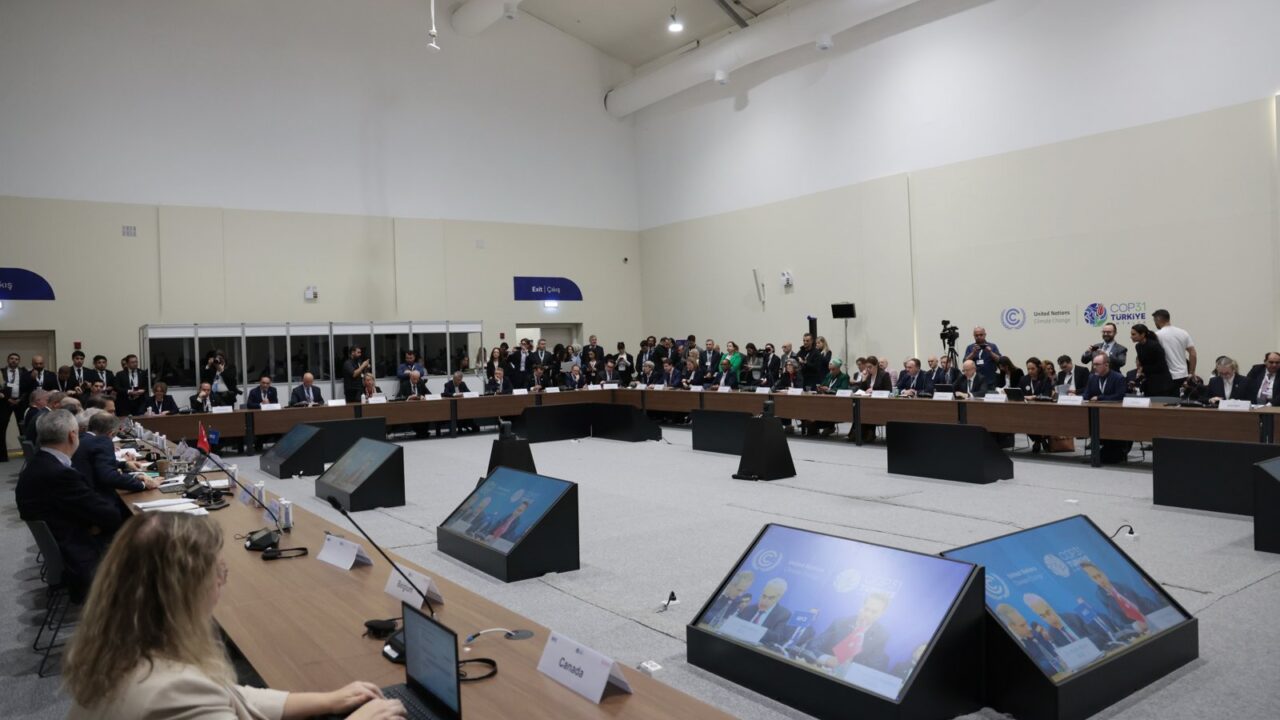
The COP31 climate summit in Antalya ended on Sunday without an agreement, after nearly 200 countries failed to agree an overarching deal in talks that ran two days over schedule, with fossil fuels the sticking point. It is the first failure to reach consensus since Copenhagen in 2009, and the gathering became the longest ever.
The breaking point was fossil fuels. The first draft called for an immediate transition away from fossil fuels in energy systems, but every mention was stripped from later drafts despite pressure from more than 100 countries. The final text instead promoted carbon capture, which critics call expensive and unproven at scale, and offered no firm finance numbers, despite a call to triple adaptation funding by 2035.
Europe and island states reject the text
The European Union, Panama, the Marshall Islands and Norway refused to accept the draft. Speaking for the EU, Ireland’s climate minister Darragh O’Brien said the bloc would not endorse a decision that does not even mention fossil fuels. Marshall Islands envoy Kathy Jetn̄il-Kijiner said her country would not be forced to accept false solutions, warning that seas are rising and ecosystems are collapsing. COP31 president Murat Kurum told delegates there was no consensus on the document.
On the other side, Saudi Arabia and Russia opposed any reference to moving away from oil, gas and coal. Russian delegate Sergei Kononuchenko said his country could not agree to any fossil fuel formulation, while Saudi Arabia’s negotiator said the 22 member Arab League backed the pact. The United States did not take part, having pulled out of international climate action.
What survives, and what happens next
Not everything was lost. Delegates adopted a programme to help workers and communities move away from fossil fuels and a plan to assess adaptation progress, and over 90 countries signed a pledge to speed up electrification. Negotiations chief Chris Bowen called it very disappointing and said countries would reconvene in Ethiopia next year. UN Secretary-General António Guterres said he was deeply disappointed, adding that fossil fuels are driving the climate crisis.
The collapse reverses Dubai in 2023, when countries first agreed to transition away from fossil fuels, and the loss and damage fund agreed in Egypt the year before. A UN report warned the world will overshoot the 1.5C Paris limit and is on course for 2.8C on current policies, with temperatures already about 1.4C above pre-industrial levels. The talks also unfolded against surging demand for power from data centres. As heatwaves, floods and other extremes underline the cost of warming, veteran negotiator Harjeet Singh said no deal was better than a deal that locks in failure.