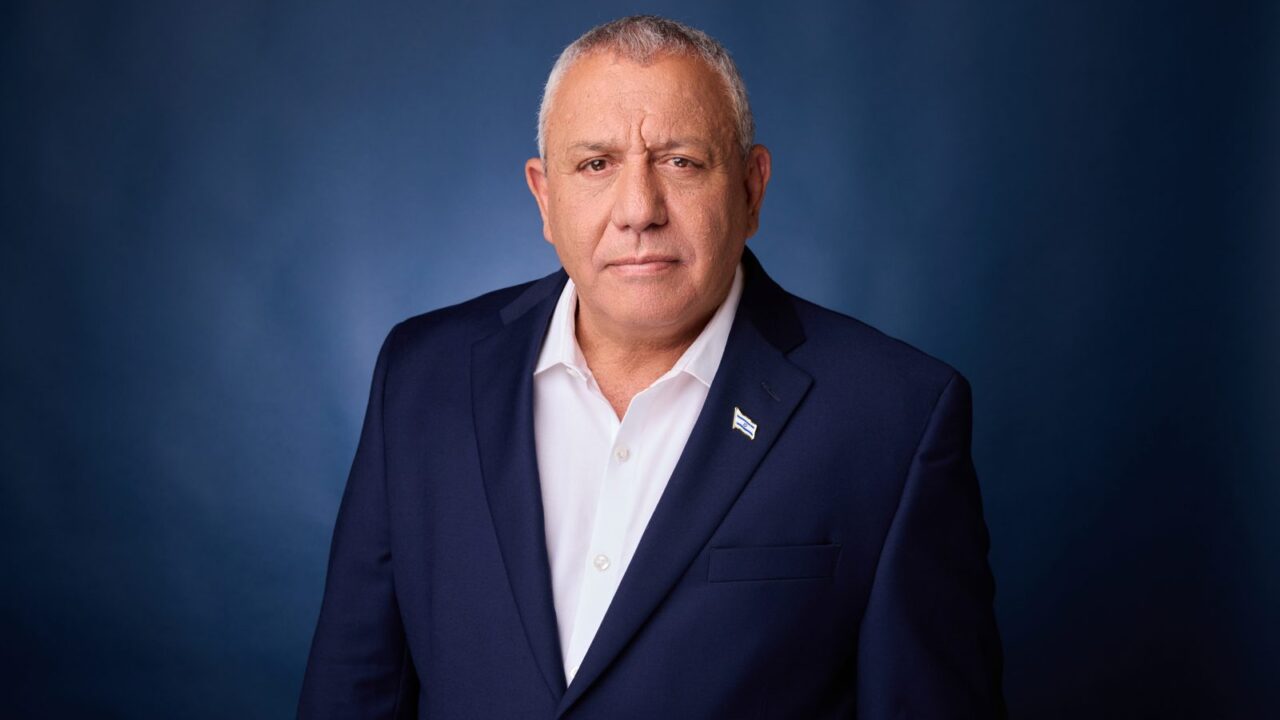
President Isaac Herzog has tasked opposition leader Gadi Eisenkot with forming Israel’s next government, passing over Prime Minister Benjamin Netanyahu after an election that left neither side with a majority.
Herzog announced the decision on Saturday evening, after consulting every Knesset party. He will formally hand Eisenkot the mandate at a ceremony on Sunday. Eisenkot, a former military chief who leads the centrist Yashar party, won backing from 67 of the 120 incoming lawmakers, while 46 recommended Netanyahu. The seven member United Torah Judaism party made no recommendation.
A mandate without a majority
The count flatters Eisenkot’s position. His four party bloc won 48 seats in the October 27 election, Netanyahu’s bloc took 53, and Arab led parties won a record 19. Eisenkot has ruled out governing with the Arab led parties, so those endorsements are not a ready coalition. Winning over the two ultra Orthodox parties, United Torah Judaism and Shas, would give him exactly 61 seats, the minimum needed.
Eisenkot has set four conditions for any party seeking to join his government, including recognition of Israel as a Jewish, democratic, liberal and egalitarian state and recognition of Hamas as a terrorist organisation. He has also ruled out serving alongside Netanyahu, saying anyone who held a major position when Hamas attacked on October 7, 2023 must leave public life. He wrote on X: “Now is the time to form a national emergency government. I will do everything to ensure we are worthy.”
Shortly before the announcement, Netanyahu warned that a government formed with Arab led support would lead to Israel’s collapse. Arab led lawmakers, who endorsed Eisenkot, say their priority is bringing down the Netanyahu government.
What happens next
Eisenkot has 28 days from Sunday to assemble a coalition, with a possible 14 day extension. The new Knesset is sworn in on Tuesday, when it also elects a new speaker. If he fails, the mandate is expected to pass to Netanyahu. If no government is formed, a new election would follow within 90 days, with Netanyahu staying on as caretaker prime minister.
It follows a week in which voters on the other side of the Atlantic also redrew the balance of power, as seven flips delivered a new Senate majority for Democrats in the United States. New leaders there are also laying out priorities, with Jeffries setting the agenda around affordability and accountability in Washington.
Israel has been here before. After three deadlocked elections in 2020, Netanyahu and his centrist rival Benny Gantz agreed a power sharing deal with a rotating leadership, and the country held five elections between 2019 and 2022. The difference this time is the record result for the Arab led parties, whose 19 seats followed record turnout among Arab voters. They now hold the balance between the two blocs, even though Eisenkot has ruled out governing with them.