

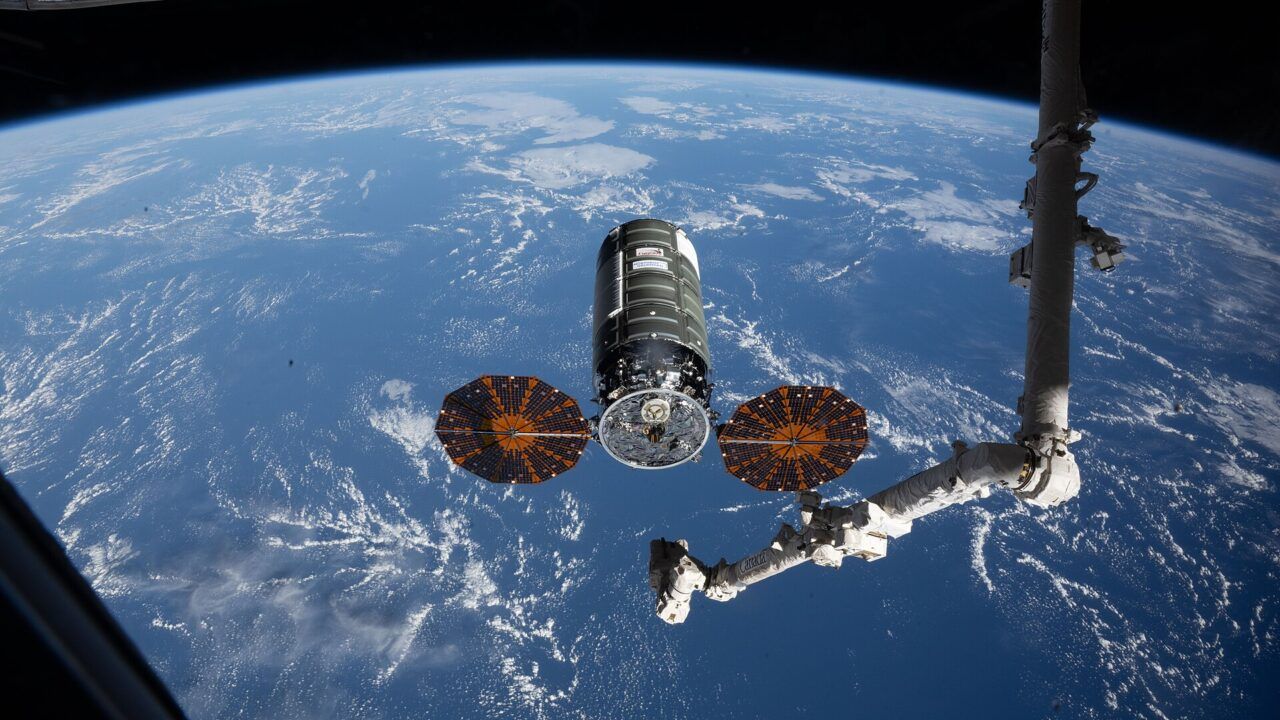
Northrop Grummans Cygnus XL cargo spacecraft is scheduled to depart the International Space Station on Friday, October 9, closing out the Commercial Resupply Services-24 mission after delivering more than 11,000 pounds of supplies, science experiments and other cargo, NASA said.
NASA planned live coverage of the undocking and departure beginning at 12:30 p.m. Eastern Daylight Time on NASA+, Amazon Prime and the agencys YouTube channel. Flight controllers on the ground were to command the stations Canadarm2 robotic arm to detach Cygnus XL from the Earth-facing port of the Unity module and maneuver it into position for release at 12:45 p.m. NASA astronaut Luke Delaney was assigned to monitor the operation from aboard the station.
The uncrewed freighter launched April 11 on a SpaceX Falcon 9 rocket from Space Launch Complex 40 at Cape Canaveral Space Force Station in Florida, and was captured and berthed at the station on April 13. NASA and Northrop Grumman name each Cygnus vehicle for a figure in spaceflight history. This spacecraft, the S.S. Steven R. Nagel, honors the NASA astronaut who flew four missions and commanded the flight that deployed the Compton Gamma Ray Observatory.
Cygnus does not return cargo to Earth. Instead, crews load it with thousands of pounds of disposal items and unneeded material, turning departure into the stations way of taking out the trash. After release, the spacecraft was scheduled to deorbit on Sunday, October 11, for a destructive reentry over a remote area, burning up safely in the atmosphere. NASA did not plan coverage of the deorbit burn itself.
Missions like CRS-24 are the routine logistics backbone that keeps the orbiting laboratory stocked with food, hardware and research payloads while crews focus on experiments and maintenance. Cargo vehicles also buy down risk: a freighter that can be filled with waste frees up station volume and simplifies operations ahead of the next arrival. NASA buys these flights commercially from Northrop Grumman and SpaceX under the Commercial Resupply Services program rather than operating its own cargo fleet.
For viewers, departure day is a quiet kind of spectacle, a slow robotic-arm release rather than a launch. It marks the end of a six-month stay that began with a Florida liftoff in spring and closes with a brief, bright reentry, a reminder that the station runs on a steady rhythm of arrivals, handovers and farewells.
The mission also illustrates how the stations cargo fleet has diversified. Cygnus flies in two variants, and the enlarged XL version on CRS-24 carried the missions eleven thousand pounds in a bigger pressurized module launched on a Falcon 9 rather than Northrop Grummans own Antares rocket, an arrangement that reflects the flexible manifesting NASA now expects from commercial providers. The vehicle berthed rather than docked, captured by Canadarm2 and installed by controllers, the same robotic choreography planned in reverse for Fridays release.
Steven R. Nagel, the spacecrafts namesake, flew in space four times between 1985 and 1993 as pilot and commander. Continuing the tradition of naming Cygnus vehicles for astronauts and industry figures connects each routine delivery to station history. Once released and clear of the station, Cygnus XL was to fire its engine for the deorbit burn on October 11, ending a flight that delivered science in April and removes waste in October, the full circle of a cargo mission.