

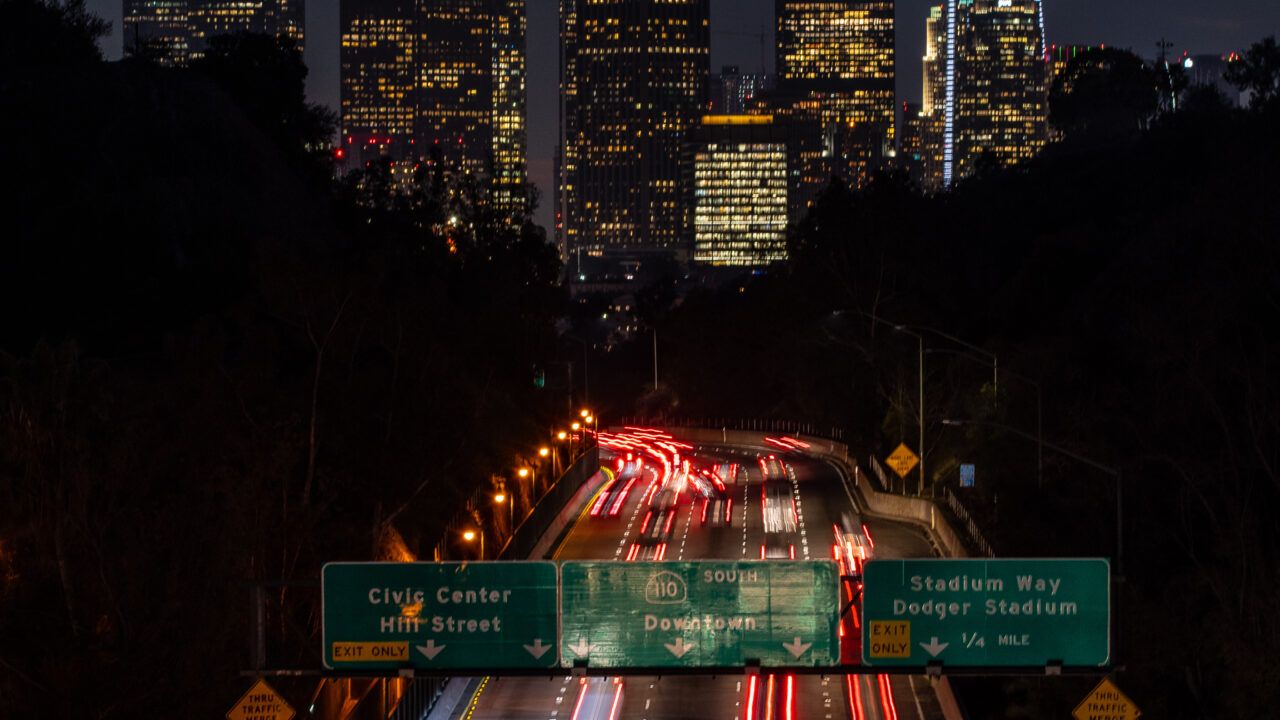
LOS ANGELES — California leaders reacted angrily this week after President Donald Trump, speaking to supporters in Nebraska, suggested Iran could “take out” a major American city such as Los Angeles or San Diego — remarks the White House later said were meant to describe the danger of a nuclear-armed Iran.
Trump made the comments at a political rally in Grand Island, Nebraska, on Monday, while discussing wartime economic sacrifices from the conflict with Iran. He described higher prices for fuel, fertiliser and other products as a small price to pay for keeping the world and the country safe, and said the war would end very soon, one way or the other.
The California response
Governor Gavin Newsom, a Democrat who has positioned himself as a leading political foil to Trump and is viewed as a potential 2028 presidential candidate, denounced the president on social media as deranged and dangerous. He linked the remark to the earlier deployment of the National Guard and Marines to California, and in a statement to The Hill went further, urging that the president’s fitness for office be questioned.
Los Angeles Mayor Karen Bass said statements against the city were dangerous and could potentially compromise its safety.
The criticism was not confined to Democrats. Jim Desmond, a Republican running in a competitive race in a redrawn California district near San Diego, distanced himself from the remarks. He wrote that he vehemently disagreed, that America must stand up to Iran, but that the first responsibility of a commander in chief is to protect the American people — and that no American city is expendable and no American family should be treated as collateral damage. Rep. Kevin Kiley, an independent who caucuses with Republicans and is running for re-election in a competitive northern California race, called the comment unhelpful.
The White House explanation
On Tuesday, the White House dismissed the criticism. Communications Director Steven Cheung said the media reaction was not rooted in reality and that the president was clearly stating that US cities would have been threatened if a nuclear Iran had not been stopped. America is safer because of the president, he said, adding that Iran has no nuclear capability, no navy, no air force and no money.
That framing — sacrifice now against catastrophe prevented — is one Trump has used before. He has shrugged off cost-of-living concerns stemming from the Iran conflict previously, and downplayed the potential for Iran or its allies to launch an attack on American soil.
Why the words landed hard
Context explains much of the reaction. California’s early voting for the November midterm elections started on Monday, the same day as the Nebraska rally. Republicans have hoped to win more races in the state this year, including the gubernatorial election, in districts redrawn after Newsom championed a new congressional map favouring Democrats — itself a response to Trump’s push for Texas to redraw its map to help Republicans.
In that environment, a remark naming the state’s two best-known cities was never going to be heard as an abstract point about deterrence. It was heard, by allies and opponents alike, as a statement about which Americans’ safety counts. That is why a Republican candidate in a San Diego-area race felt the need to answer it within hours, and why the White House moved the next day to explain what the president meant.
Nebraska, where Trump was speaking, voted for him by a wide margin in 2024. The crowd he addressed farms in a region where fuel and fertiliser prices are not abstractions either. His argument there was that wartime costs are artificial and temporary. The political problem is that the sentence travelled further than the argument: it reached California voters at the start of early voting, and it reached Republican candidates who now have to decide, race by race, whether to defend it or distance themselves from it.
With the midterms weeks away, the episode is a reminder that in a nationalised election, a single line at a rally in Grand Island can become a campaign issue 1,500 miles away before the week is out.