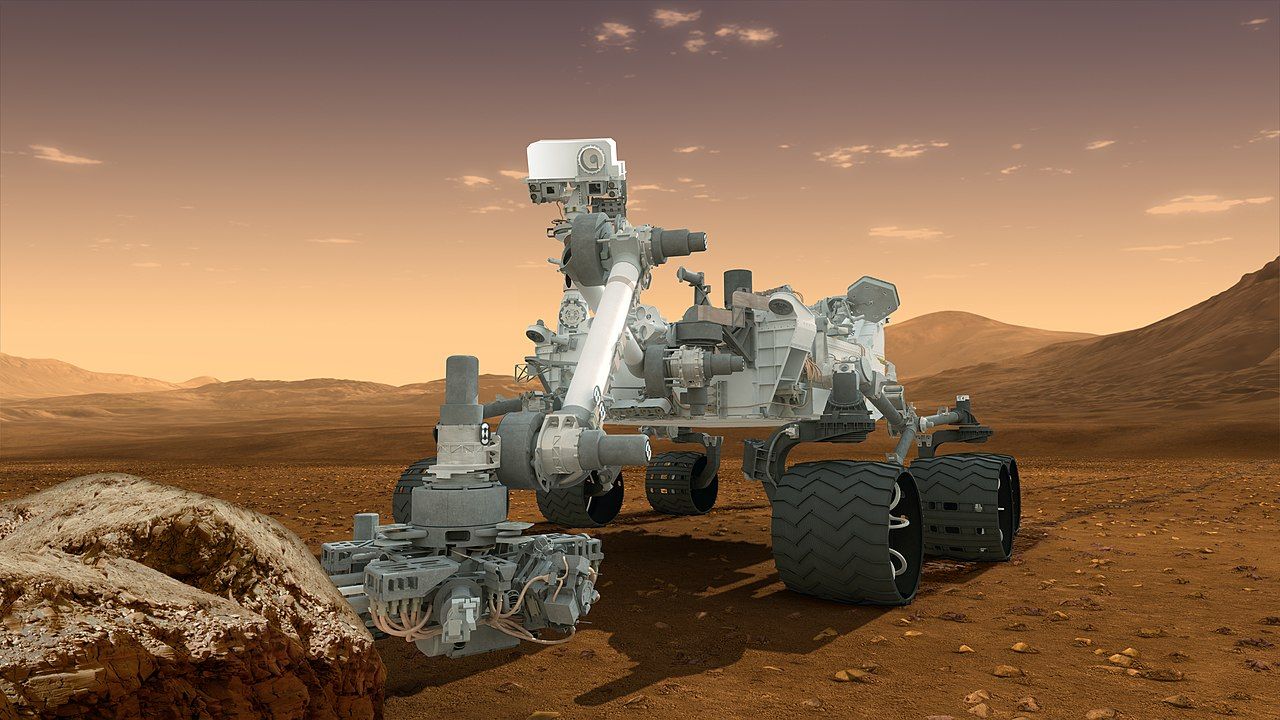
NASA has released a striking dawn image from its Curiosity rover on Mars, showing wind-carved cliffs on Mount Sharp about an hour after sunrise.
The Mastcam view captures yardangs, the sharp, streamlined ridges left when wind erodes rock over long periods. In the low morning light, the cliffs cast long shadows that make the layered ground easy to read.
According to NASA, the layer in view may be ancient wind-blown sediment or ash that hardened into rock roughly 3 billion years ago. The formation spans about 16 kilometres, a reminder of how large these Martian landscapes are.
Mount Sharp rises from the floor of Gale Crater, where Curiosity landed in 2012. The rover has been climbing its lower slopes for years, reading the rock layers like pages in a history of the planet’s climate.
The mission says Curiosity has now climbed more than 1 kilometre in elevation, the most any rover has managed on Mars. Each metre gained takes it into younger rock and a later chapter of the story.
Images like this are science tools, not just pictures. The shape and layering of the cliffs help researchers judge how wind and water shaped the area, and where to drive next.
They also carry a quieter value. A sunrise photographed by a machine on another planet, more than a decade into its mission, shows how long careful engineering can keep working.
Curiosity continues its climb. If the rocks ahead keep their record intact, the rover’s dawn views may yet explain how Mars changed from a wetter world into the cold desert seen today.
NASA’s release fills in how the picture was made. The panorama was captured on August 11 from six Mastcam frames on the mission’s 4,982nd Martian day and published on October 6. Unlike most Mastcam views, it was not white-balanced to Earth-like daylight, so the colours stay close to how Martian dawn actually lit the scene, with foreground ground still holding an early blue tone while sunlight struck the distant ridges. Project scientist Ashwin Vasavada of the Jet Propulsion Laboratory describes the yardang layer as looking out of place, with the wrong colour and layers tilted at an odd angle, sitting above an unconformity where older rock eroded before new sediment arrived. Mount Sharp itself rises about 3 miles, or 5 kilometres, from the crater floor, and the team hopes to drive Curiosity up to the yardang layer in 2027 to read that puzzling chapter at close range.
Related reading: Cygnus XL Cargo Ship Set to Leave Space Station After Six-Month Stay · Francis Halzen Wins Nobel Physics Prize for IceCube Neutrino Observatory · ALMA Finds Heavy Methanol Around Baby Stars for the First Time