

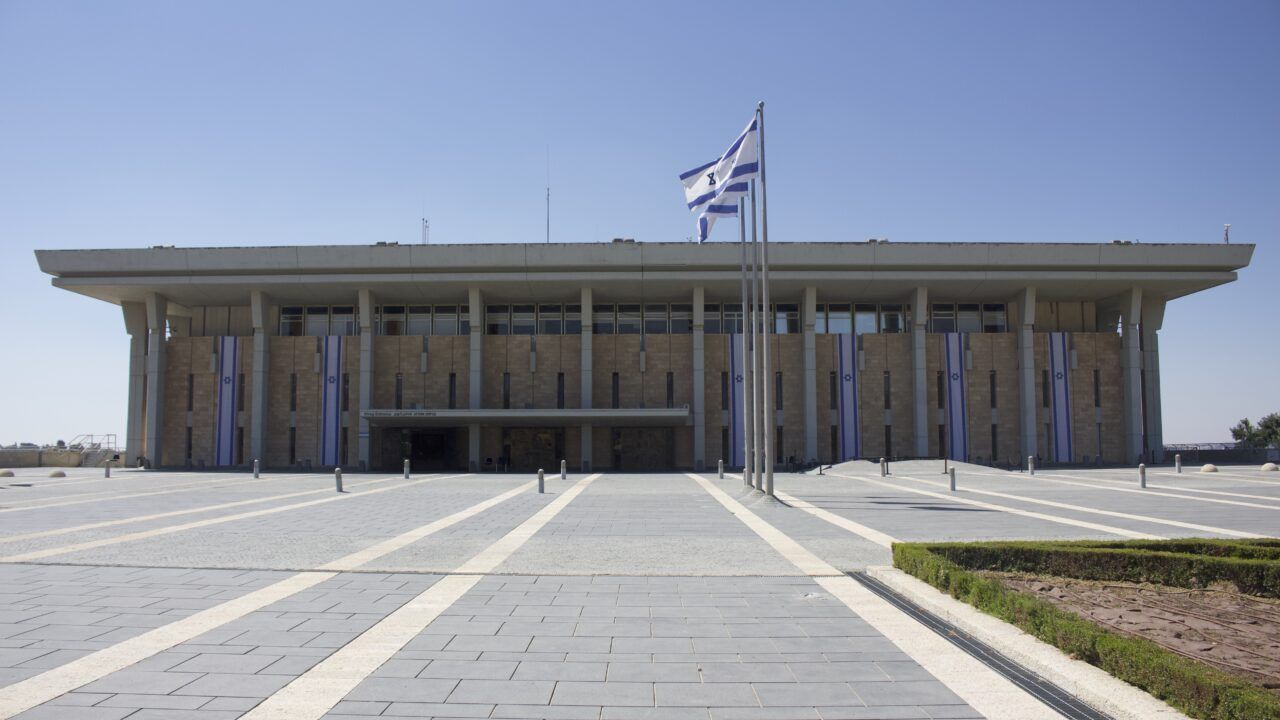
JERUSALEM — With Israel’s election set for October 27, the race to lead the country is tightening into a deadlock in which neither Prime Minister Benjamin Netanyahu’s bloc nor the opposition led by Gadi Eisenkot appears able to secure the 61 seats needed to govern.
The election is shaping up as a reckoning over Netanyahu’s leadership three years after the Hamas-led October 7 attacks killed about 1,200 people and took 251 hostages. Some survivors and families are demanding accountability for the security failures of that day, while others credit Netanyahu’s wartime leadership across Gaza, Syria, Lebanon and Iran.
What the latest surveys show
Recent polling has moved in small but meaningful steps. One Channel 13 survey put Netanyahu’s bloc narrowly ahead, 54 seats to 52 for the opposition bloc, with Arab parties holding 14. Eisenkot’s Yashar party remained the largest single party in that projection even as its support eased, while Netanyahu’s Likud strengthened.
Other surveys tell a slightly different story. A Channel 12 poll showed Eisenkot still ahead of Netanyahu on the question of who is better suited to be prime minister, by 41% to 38% — narrowed from a six-point gap a week earlier. In a head-to-head comparison with Naftali Bennett, Netanyahu moved ahead 41% to 37%, reversing the previous week’s result.
Analysts watching the trend inside the blocs describe a slow, consistent shift: Eisenkot’s party slipping from its earlier highs while Bennett and his partners strengthen, and on the right, Likud shedding a couple of seats to smaller partners such as Otzma Yehudit and Religious Zionism. The lesson Israeli voters appear to be applying, one analyst noted, is that the size of the bloc matters more than the size of any one party.
The inquiry question
Running through the campaign is a dispute Netanyahu has never settled. He has blamed security chiefs for the failures of October 7, refused to accept personal responsibility and blocked an independent commission of inquiry. Eisenkot and Bennett have both promised to establish an inquiry on their first day in office.
The public appears to have made up its mind on that issue even while it hesitates between leaders. In one survey, 69% of respondents said the next government should set up a state commission of inquiry into October 7, with only 15% opposed. Support reached 95% among opposition voters and 43% even among coalition voters. The same survey found 65% in favour of legislation limiting the tenure of a prime minister.
Those numbers help explain why the inquiry has become more than a procedural argument. For families of victims and hostages, it is the unfinished business of the war. For Netanyahu’s challengers, it is the clearest line between his government and theirs.
The arithmetic problem
Most polls show Eisenkot’s party leading Likud, but neither bloc appears likely to secure the 61 seats required for a Knesset majority. That leaves Israel facing the possibility of another difficult coalition negotiation — or another election — after October 27.
The smaller parties therefore matter enormously. Bennett’s list has climbed back into double figures after a weak summer. The ultra-Orthodox parties together are projected to hold around 15 seats, making them potential kingmakers. Arab-majority parties could also hold seats important to the arithmetic, although Eisenkot has ruled out forming a coalition with parties led by Palestinian citizens of Israel.
Economic pressure sits underneath the political manoeuvring. Rising food and living costs are influencing voters, and a dispute over exemptions from military conscription for ultra-Orthodox men has intensified since the Supreme Court ruled in 2024 that there was no legal basis for continuing the exemption.
Why it matters beyond Israel
Israel is one of America’s closest partners in the Middle East, and the outcome will shape decisions on security, hostages, Gaza and relations with Iran that involve Washington directly. A government led by Eisenkot or Bennett would likely reopen questions Netanyahu has kept closed, starting with the October 7 inquiry. A returned Netanyahu government would claim vindication for its wartime course.
With three weeks left, the honest summary of the race is the one the polls keep delivering: Israelis are closely divided, incumbency is being tested against a demand for accountability, and no one can yet say who will be able to assemble 61 seats on the morning after the vote.