

SEOUL — North Korea has criticised the United States over its arms sales and military support for Taiwan, accusing Washington of fuelling tensions in the Taiwan Strait, while its leader Kim Jong Un separately pledged continued support for Russia in a message to President Vladimir Putin.
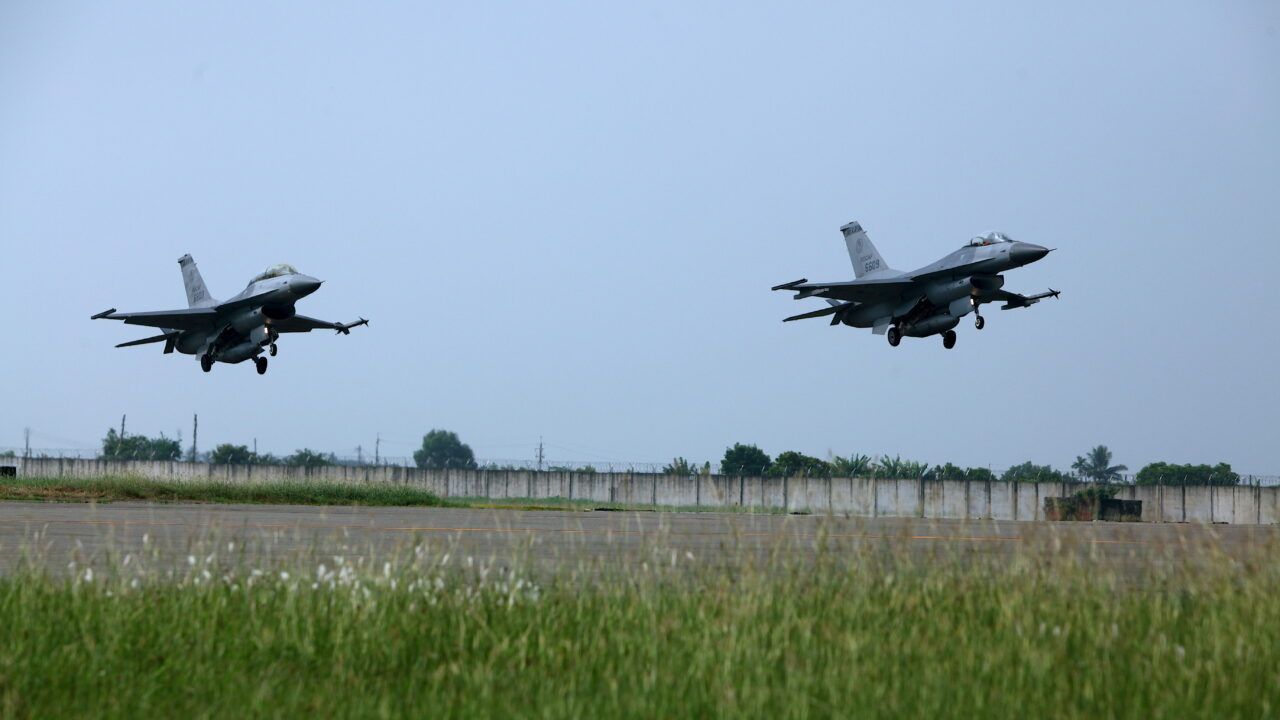
The criticism appeared in a commentary carried by state media KCNA, citing North Korean international affairs analyst Kim Myong Chol. The commentary said US policy on Taiwan was undermining peace and stability in the region and condemned the appearance of US-sold fighter aircraft in Taiwan. It warned Washington to think twice about whether it was ready for a direct confrontation with China over Taiwan’s security, and whether it could cope with the consequences.
New jets, old fault line
The immediate trigger was the arrival in Taiwan last week of the first two of a batch of 66 new F-16V Block 70 fighter jets ordered in 2019. Taiwan faces rising military pressure from Beijing, which claims the democratically governed island as its own territory. Taipei rejects Beijing’s sovereignty claim.
North Korea’s intervention shows Pyongyang aligning more closely with China on Taiwan, one of Beijing’s most sensitive foreign policy issues. During a summit in Pyongyang in June, Kim told Chinese President Xi Jinping that North Korea would fully support the “One China” principle. The meeting also included a reference to defence links, with China saying both sides would enhance exchanges in diplomacy, law enforcement, military affairs and other fields.
For Washington, the significance is not that North Korea’s commentary changes the military balance in the strait overnight. It is that three governments the United States treats as central security challenges — China, Russia and North Korea — are increasingly speaking in support of one another’s core positions.
A birthday message with a purpose
In the second KCNA report, Kim pledged continued support for Russia and its war effort in a birthday message to Putin. Kim said Pyongyang would continue to expand joint work under the countries’ comprehensive strategic partnership and expressed confidence that Russia’s effort to defend its sovereignty, security interests and territorial integrity would end in victory.
The message did not explicitly mention Russia’s war in Ukraine. The context, however, is well established. North Korea has sent an estimated 14,000 to 15,000 troops to support Russia’s war in Ukraine since 2024, according to Ukrainian and South Korean estimates. North Korea and Russia have strengthened ties sharply since Putin and Kim signed a mutual defence pact in June 2024.
That partnership has already affected the war and, by extension, American policy. The United States and its allies have supplied Ukraine while also watching whether North Korean manpower, artillery and missiles change what Russia can sustain. A public pledge to expand joint work signals that Pyongyang does not intend to step back from that role.
What it means for US policy
American officials face a familiar problem in a sharper form. Taiwan policy rests on arms sales and strategic clarity about US support, while deterrence in Asia depends on allies such as South Korea and Japan. When North Korea echoes Beijing’s language on Taiwan and simultaneously deepens its partnership with Moscow, it reinforces the argument in Washington that these theatres can no longer be planned in isolation.
It also raises the diplomatic temperature at a sensitive moment. New fighter jets arriving in Taiwan are, for Taipei, a defensive necessity. For Beijing, they are evidence of American interference. For Pyongyang, they are an opportunity to demonstrate solidarity with China while reminding Washington that it has partners.
None of this means a crisis is imminent. KCNA commentaries are a routine instrument of North Korean messaging, and birthday messages between Kim and Putin have become a regular feature of their partnership. But routine messages can still carry real information. In this case, the information is alignment: on Taiwan, Pyongyang is standing with Beijing; on Russia’s war, it is standing with Moscow.
Watching for the next step
The practical questions come next. Will North Korea move beyond commentary on Taiwan? Will its joint work with Russia expand in ways that show up on the battlefield or in weapons transfers? And how will Washington calibrate its support for Taiwan knowing that each delivery is read not only in Beijing but in Pyongyang as well?
For now, the statements stand as a concise map of where North Korea wants to be seen: beside China on the region’s most sensitive territorial question, and beside Russia in a war that continues to shape American foreign policy on two continents.