


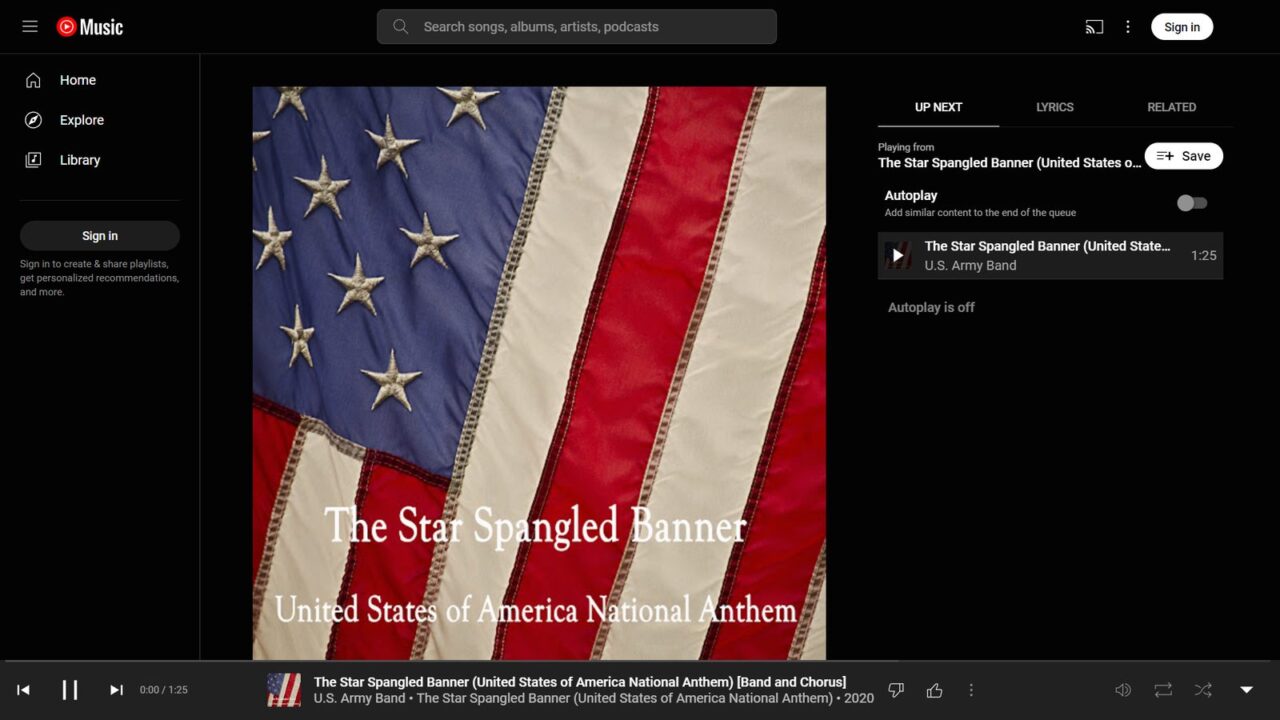
YouTube Music has started rolling out new labels that flag songs created with generative artificial intelligence, giving listeners clearer information about how the music they stream was made. The announcement on Wednesday marks one of the most visible moves yet by a major streaming service to distinguish human-made music from machine-made tracks.
When a song in which AI played a significant role is played in the YouTube Music app, a “Made with AI” label appears directly on the player page. Tapping the label opens a menu with more detail about what AI contributed — for example, whether a generative model produced the composition, the vocals, or both. The rollout has begun in the YouTube Music app and will expand to the main YouTube app later, according to reports.
How the disclosure system works
YouTube is asking music partners to declare when their uploads use generative AI. According to reports, partners can designate a track as fully generated by AI, partly AI-assisted alongside human performance, or not AI-generated at all — with routine studio tools such as pitch correction falling into the last category.
Where partners fail to disclose, YouTube says it may rely on its own detection systems and other signals to identify machine-made tracks. The company says it worked with music industry partners and built its own tools to spot AI-generated audio, extending labelling principles it already applies to AI-altered video.
An industry split over AI music
The shift comes as generative AI systems grow more capable across creative industries, from music to workplace software. Spotify introduced its own AI labelling earlier this year and says it will not recommend tracks from what it calls AI personas, while Apple Music is reportedly preparing a similar tag. Deezer has taken the strictest line: it says it receives nearly 90,000 fully AI-generated tracks a day and keeps them out of recommendations and editorial playlists.
YouTube, by contrast, is betting on disclosure rather than demotion. The company says AI involvement alone does not disqualify a track from monetisation — the label informs rather than punishes. It is also experimenting with its own AI music tools, including Dream Track, which lets selected creators generate soundtracks featuring AI-generated versions of participating artists’ voices.
For artists, the labels could become a new form of transparency currency — a way to prove human authorship in a feed flooded with synthetic songs. For listeners, they answer a question that has grown harder to ask: was this made by a person or a machine? How strictly platforms enforce the rules, and whether listeners even notice the badges, will decide whether disclosure changes anything at all.